Winter Heat
Chicken heat lamp wattage: what size do you need?
Wattage is the wrong control. Height above the birds is the control, and a thermometer at their level is the instrument.
Chickens & Coops earns a commission when you buy through our links, at no extra cost to you. Prices come from Amazon and change; the date beside every price is when we last verified it. Full disclosure.
Top pick
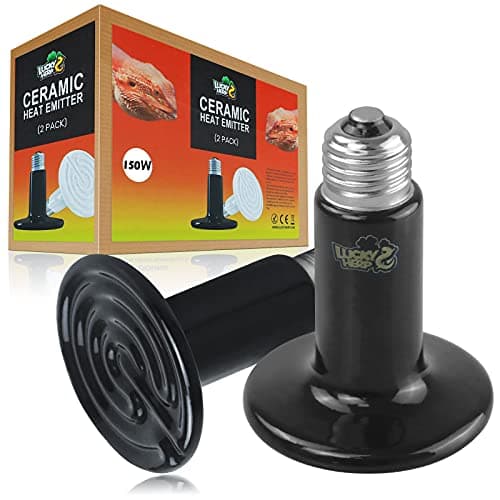
LUCKY HERP 150W Ceramic Heat Emitter
A 150-watt ceramic emitter that screws into a standard lamp socket and gives heat without light.
#ad How we are funded · Price as of November 8, 2026
Quick picks
| # | Product | Power | Score | Price |
|---|---|---|---|---|
| Rank 1 | LUCKY HERP 150W Ceramic Heat Emitter A bulb-socket heat source with no light | 150 W | 8.7 | $15.99LUCKY HERP 150W |
| Rank 2 | 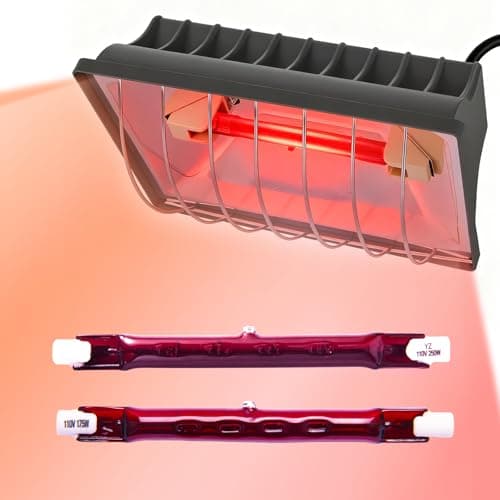 Homnebila 250W Heat Lamp with Guard Short-term brooder heat, with the guard fitted | 250 W | 8.6 | $36.99Homnebila 250W Heat |
| Rank 3 | 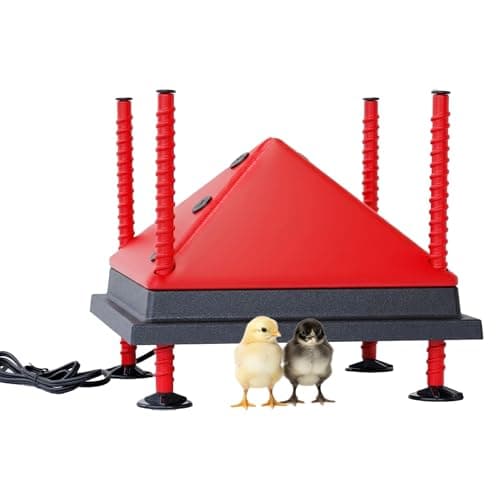 RentACoop 12x12in Adjustable Heating Plate with Anti-Roost Cone The safest brooder heat, with the roosting problem solved | Not published | 9.3 | $59.95RentACoop 12x12in |
| Rank 4 | 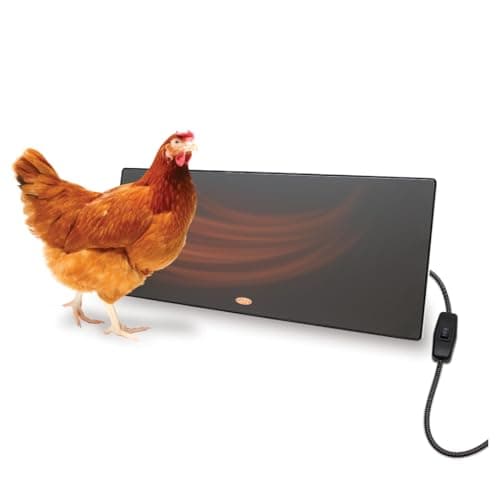 Cozy Products Cozy Coop Flat-Panel Heater, 150W The safest way to take the edge off a cold coop | 150 W | 9.0 | $54.69Cozy Products, 150W |
#ad Prices come from Amazon and change. How this site is funded. Scores are our own published rubric, not a lab test — see how we pick.
For a small brooder of up to about twenty-five chicks, a 125 to 175 watt lamp is usually enough, and 250 watts is the standard choice only for larger groups or a cold space. But the number matters far less than people expect, because you do not set brooder temperature with the wattage. You set it with the height of the lamp above the litter, and you verify it with a thermometer at chick level. A 250 watt lamp hung high and a 150 watt lamp hung low can deliver the same temperature where it counts.
For an adult coop the honest answer to the wattage question is different: most coops should not have a heat lamp in them at all. More on that below, because it is the single most consequential thing on this page.
The figure the wattage has to hit
Extension's brooding guidance sets the initial brooder temperature at 90 to 95 degrees Fahrenheit, measured 2 inches above the floor under the edge of the hover, and says to reduce it by 5 degrees each week until supplemental heat is no longer required. That measuring point is as important as the number: two inches above the litter is where a chick lives, and it is nothing like the temperature at your eye level or at the lamp.
| Week | Target at chick level | Typical adjustment |
|---|---|---|
| 1 | 90-95 F | Set the height to hit it, then leave it |
| 2 | 85-90 F | Raise the lamp a few inches |
| 3 | 80-85 F | Raise again |
| 4 | 75-80 F | Raise again |
| 5 | 70-75 F | Most chicks need little or no heat by now |
| 6 | Ambient | Off, if the ambient temperature allows |
Choosing a wattage for a brooder
- Count the chicks and measure the space. A dozen chicks in a cardboard brooder in a heated room needs very little. Thirty chicks in an unheated garage in March needs a lot more.
- Start with the ambient temperature. The lamp only has to make up the difference between ambient and 90-95 F. That is why the same bulb is right in one house and wrong in another.
- Pick the lower wattage if you are between two. An underpowered lamp hung lower is safer than an overpowered one hung high, because it fails gradually rather than cooking the brooder.
- Hang it from a chain or a ratchet, not from its own cord. You will raise it five times in six weeks, and the cord clamp is the failure point in every brooder fire story.
- Put a thermometer at chick level and read it before the chicks arrive. Run the brooder empty for a few hours and adjust the height until the reading is right.
Chick behavior is the real instrument
A thermometer tells you the number; the chicks tell you whether the number is right for them. Huddled tight under the lamp and cheeping loudly means too cold. Pressed to the far walls, panting, wings held out means too hot. Spread evenly, some under the heat and some eating, means it is correct — whatever the dial says.
This is also the argument for never heating the whole brooder uniformly. You want a warm end and a genuinely cooler end, so the chicks can regulate themselves by moving. A brooder with no cool end is as much of a problem as one with no warm end.
Wattage for an adult coop: the wrong question
People search for a coop heat lamp wattage expecting a number. The useful answer is that MSU Extension advises against supplemental heat in most circumstances, because the fire risk from a heat source near combustible bedding is too high, and states that a properly constructed, mostly draft-free coop with adequate ventilation is enough to limit the danger from cold.
A hanging 250 watt bulb above deep dry bedding, in a wooden structure, on a cord, in a space full of dust and birds that fly — that is the highest-risk object you can put in a coop. If you want warmth in an adult coop, a flat radiant panel on a wall is the format that removes the glass envelope and the hanging point at once. Ours runs at 150 watts for a small coop and 200 for a walk-in: radiant panels warm surfaces rather than air, so wattage decides how large an area is usefully warmed rather than a coop temperature you can predict.
The options, by wattage
A 150 watt ceramic emitter with no light, a 250 watt lamp with the guard fitted, the brooder plate that replaces a lamp outright, and the flat panel that is the right answer for an adult coop.
#1 · A bulb-socket heat source with no light
#ad How we are funded · Price as of November 8, 2026
LUCKY HERP 150W Ceramic Heat Emitter
LUCKY HERPA 150-watt ceramic emitter that screws into a standard lamp socket and gives heat without light. No light is a genuine welfare advantage: a red bulb burning all night disrupts the birds' rest.
| Power | 150 W |
|---|---|
| Type | Ceramic heat emitter |
| Light output | None |
| Fitting | Standard screw socket |
| Fixture included | No |
Specifications per Manufacturer figures as published on the Amazon product listing, as published at the date above.
Why we picked it
- Heat with no light, so the flock's night is not disrupted
- Ceramic element has no filament or glass envelope to shatter
- Fits the lamp fixtures most people already own
- Cheapest heat source here
Good to know — The fixture is the weak link: a cheap clamp lamp is the actual fire risk, not the emitter
Our rubric
- Fire safety
- 8.4
- Temperature control
- 7.0
- Heat output
- 8.4
- Running cost
- 9.3
- Value
- 10.0
#2 · Short-term brooder heat, with the guard fitted
#ad How we are funded · Price as of November 8, 2026
Homnebila 250W Heat Lamp with Guard
HomnebilaA 250-watt heat lamp with a guard and adjustable temperature. A guard is the minimum acceptable specification on any bulb heater — but a hanging 250 W lamp in a wooden coop is still the highest-risk option on this page.
| Power | 250 W |
|---|---|
| Guard | Fitted |
| Control | Adjustable temperature |
| Type | Heat lamp |
Specifications per Manufacturer figures as published on the Amazon product listing, as published at the date above.
Why we picked it
- The guard is fitted, which is the single most important feature on a bulb heater
- Adjustable temperature rather than a bare on/off bulb
- 250 W is plenty of brooder heat for a large batch of chicks
Good to know — Hanging bulb heaters remain the leading cause of coop fires — this one included
Our rubric
- Fire safety
- 7.5
- Temperature control
- 8.4
- Heat output
- 9.8
- Running cost
- 7.9
- Value
- 9.3
#3 · The safest brooder heat, with the roosting problem solved
#ad How we are funded · Price as of November 8, 2026
RentACoop 12x12in Adjustable Heating Plate with Anti-Roost Cone
RentACoopA 12 x 12 inch adjustable-height heat plate with a foldable anti-roost cone. The cone is why this one is worth the premium: without it, chicks roost on top and foul the plate within days.
| Plate size | 12 x 12 in |
|---|---|
| Height | Adjustable |
| Anti-roost | Foldable cone included |
| Type | Radiant brooder heating plate |
| Wattage | Not published by manufacturer |
Specifications per RentACoop published specifications, as published at the date above.
Why we picked it
- Mimics a broody hen: chicks go under for warmth and come out to eat, which is how they self-regulate
- Anti-roost cone stops the plate becoming a perch and a toilet
- Height adjusts as the chicks grow, which they do fast
- No bulb, no light, so chicks sleep on a normal day-night cycle
Good to know — Wattage is not published
Our rubric
- Fire safety
- 10.0
- Temperature control
- 9.3
- Heat output
- 8.9
- Running cost
- 9.8
- Value
- 8.4
#4 · The safest way to take the edge off a cold coop
#ad How we are funded · Price as of November 8, 2026
Cozy Products Cozy Coop Flat-Panel Heater, 150W
Cozy ProductsA 150-watt flat radiant panel that mounts on a wall. There is no bulb to shatter and no element hot enough to ignite bedding, which is the whole argument against heat lamps.
| Power | 150 W |
|---|---|
| Type | Flat radiant panel |
| Mounting | Wall mount |
| Surface temperature | Not published by manufacturer |
Specifications per Manufacturer figures as published on the Amazon product listing, as published at the date above.
Why we picked it
- No bulb and no exposed element — it cannot shatter into dry bedding
- 150 W is a modest draw: cheap to run compared with a 250 W lamp
- Radiant warmth at bird level rather than heating the whole air volume
- Wall-mounted, so it cannot fall into the litter
Good to know — Takes the chill off a small area; it will not warm a large coop
Our rubric
- Fire safety
- 9.8
- Temperature control
- 7.9
- Heat output
- 8.4
- Running cost
- 9.3
- Value
- 9.3
Bulb type matters more than wattage
| Type | Typical wattage | Gives light? | Main risk | Best for |
|---|---|---|---|---|
| Red heat lamp bulb | 125-250 W | Yes, red | Glass envelope shatters; hanging cord | Short-term brooder heat only |
| Ceramic heat emitter | 100-150 W | No | Very hot surface; still needs a fixture | Heat without disrupting sleep |
| Carbon fiber element | About 450 W | Minimal | Still a hanging heat source | Lamp-style heat without glass |
| Brooder heat plate | Low | No | Chicks roosting on top | Brooding, as the default choice |
| Flat radiant panel | 150-200 W | No | Low — no bulb, wall mounted | An adult coop, if anything at all |
The light question is worth a sentence of its own. A red bulb burning all night in a brooder or a coop disrupts the birds' rest, and a ceramic emitter gives the same heat with no light at all. If you are buying a bulb-socket heat source, that is usually the better choice. Heat lamp versus radiant panel is the full comparison.
If you do use a lamp
- Fit the guard. Non-negotiable. A bare bulb against bedding is a fire.
- Hang it from a chain, with a second safety tie. Never from the cord.
- Keep it well clear of bedding, walls and anything combustible, and remember the chicks will pile the bedding up as they grow.
- Check the fixture's rated wattage, not just the bulb's. Over-lamping a cheap socket is a common cause of melted fittings.
- Use a thermostatically controlled outlet so it is not running at full output on a mild night.
- Dust it weekly. Dust on a hot bulb is a hazard and it is also why bulbs in coops fail early.
Frequently asked questions
What wattage heat lamp do chicks need?
What temperature should a brooder be?
What wattage heat lamp for a chicken coop?
Is a 250 watt heat lamp too hot for chicks?
Do heat lamps need to be red?
How do I know if the heat lamp is at the right height?
Our recommendation
If you buy one thing from this page, buy the first one. The second is here because it is the alternative worth weighing against it, not because a list needs two entries.
Top pick
LUCKY HERP 150W Ceramic Heat Emitter
A bulb-socket heat source with no light
#ad How we are funded · Price as of November 8, 2026
Runner-up
Homnebila 250W Heat Lamp with Guard
Short-term brooder heat, with the guard fitted
#ad How we are funded · Price as of November 8, 2026
Sources
Read next
Winter Heat
Heat lamps for chickens, and the safer alternatives
Heat-lamp alternatives ranked by how little can go wrong, plus an honest look at when a bulb lamp is still the answer.
Winter Heat
Heat lamp vs radiant panel
The safety comparison that decides most coop heating decisions, with picks for both answers.
Winter Heat
Coop heater fire safety
The checklist for running any mains appliance in a coop safely — and why extension guidance leans against heaters at all.
Hatching & Brooding
Brooder temperature by week
The week-by-week chick heat schedule from Extension's figures, where to measure it, how to read huddling and spreading, and the plates that make it easy.
Hatching & Brooding
Heat plate vs heat lamp for chicks
The brooder heat decision, with the narrow cases where a lamp is still the right tool.