Winter Heat
Heat lamp vs radiant panel
One is cheap, bright and the leading cause of coop fires. The other costs more and has nothing to break.
Chickens & Coops earns a commission when you buy through our links, at no extra cost to you. Prices come from Amazon and change; the date beside every price is when we last verified it. Full disclosure.
Quick picks
| # | Product | Power | Score | Price |
|---|---|---|---|---|
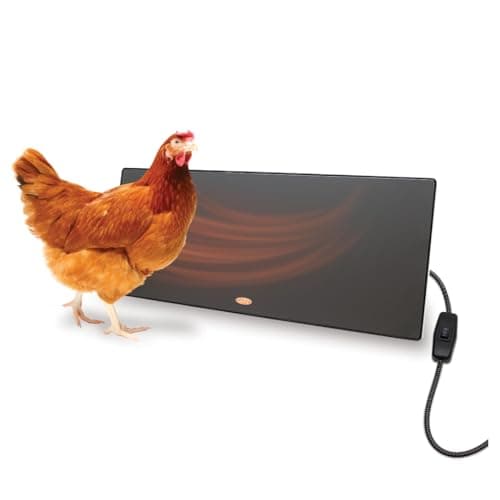
| Rank 1 | Cozy Products Cozy Coop Flat-Panel Heater, 150W The safest way to take the edge off a cold coop | 150 W | 7.2 | $54.69on Amazon |
| Rank 2 | 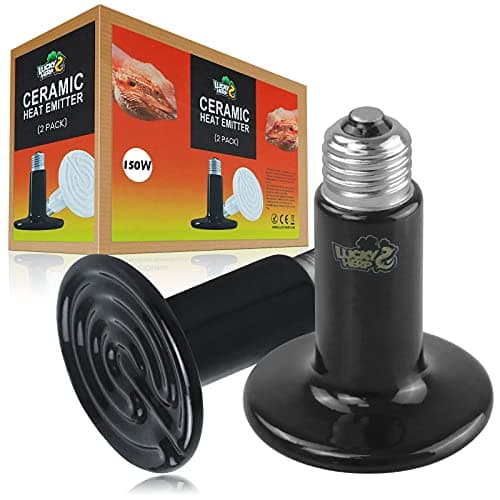 LUCKY HERP 150W Ceramic Heat Emitter A bulb-socket heat source with no light | 150 W | 6.6 | $15.99on Amazon |
| Rank 3 | 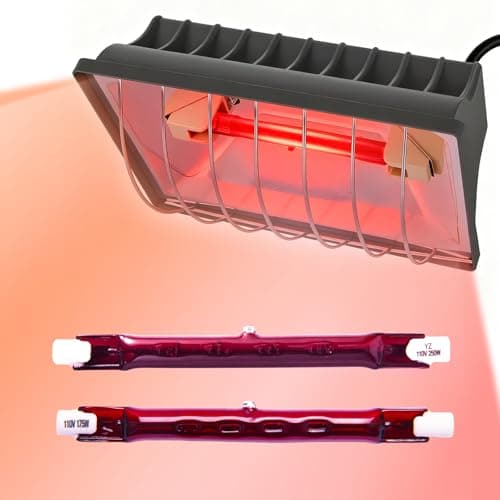 Homnebila 250W Heat Lamp with Guard Short-term brooder heat, with the guard fitted | 250 W | 6.4 | $29.99on Amazon |
| Rank 4 |  Sweeter Heater OH11x40, 150W Overhead Infrared A long-run radiant heater over a roost | 150 W | 7.0 | $161.00on Amazon |
#ad Prices come from Amazon and change. How this site is funded. Scores are our own published rubric, not a lab test — see how we pick.
This is the most consequential choice in the winter cluster, because the two options differ not in degree but in failure mode. A radiant panel that fails stops working. A bulb lamp that fails can set a wooden building full of dry bedding on fire.
Head to head
| Bulb heat lamp | Radiant panel | |
|---|---|---|
| Fire risk | Highest in the category | Low with correct mounting |
| Can shatter | Yes — glass envelope | No |
| Mounting | Clamp or chain; clamps slip | Screwed to wall or joist |
| Light output | Yes, all night | None |
| Sleep disruption | Real | None |
| Output | High, 250 W typical | Moderate, 150-200 W typical |
| Directional | Yes | Mostly not |
| Running cost | Higher | Lower |
| Up-front cost | Lowest | Higher |
| Lifespan | Bulb replacements | Years |
Why the lamp's failure mode is the whole argument
A spring clamp is a convenience, not a fixing. Over months of temperature cycling, bird movement and dust, clamps slip. When one does, a 250 W bulb at several hundred degrees lands in six to twelve inches of dry wood shavings. That is the sequence behind the coop fires extension guidance warns about, and it is why MSU Extension advises against supplemental heat in combustible-bedding environments in the first place.
Choose a radiant panel if
- The heater will be left unattended, which in a coop it always will be
- Your bedding is deep and dry, which in winter it should be
- You want the birds to sleep in the dark, which they need
- You would rather pay more once than replace bulbs
Choose a lamp if
- You need high, directional output for a short supervised period — typically the first week of a large brooder
- You can mount it on a chain with a second support, fit a guard, and control it with a thermostat
- You will replace it with a heat plate within days
Note that none of those describe a coop full of adult hens, which is the situation most people are shopping for.
The middle ground: ceramic and carbon-fiber
If you want a lamp's form factor without a bulb's failure mode, a ceramic heat emitter or carbon-fiber element screws into or hangs like a lamp but has no glass envelope. Ceramic emitters also produce no light. For brooders in cold spaces this is often the right answer.
Picks for both answers
Two panels, a ceramic emitter as the middle option, and a guarded bulb lamp for the narrow case where it is genuinely right.
#1 · The safest way to take the edge off a cold coop
#ad How we are funded · Price as of October 5, 2026
Cozy Products Cozy Coop Flat-Panel Heater, 150W
Cozy ProductsA 150-watt flat radiant panel that mounts on a wall. There is no bulb to shatter and no element hot enough to ignite bedding, which is the whole argument against heat lamps.
| Power | 150 W |
|---|---|
| Type | Flat radiant panel |
| Mounting | Wall mount |
| Surface temperature | Not published by manufacturer |
Specifications per Manufacturer figures as published on the Amazon product listing, as published at the date above.
What it does well
- No bulb and no exposed element — it cannot shatter into dry bedding
- 150 W is a modest draw: cheap to run compared with a 250 W lamp
- Radiant warmth at bird level rather than heating the whole air volume
- Wall-mounted, so it cannot fall into the litter
Where it falls short
- Takes the chill off a small area; it will not warm a large coop
- No built-in thermostat — pair it with a thermostat outlet
- Surface temperature is not published
Our rubric
- Fire safety
- 9.0
- Temperature control
- 5.0
- Heat output
- 6.0
- Running cost
- 8.0
- Value
- 8.0
#2 · A bulb-socket heat source with no light
#ad How we are funded · Price as of October 5, 2026
LUCKY HERP 150W Ceramic Heat Emitter
LUCKY HERPA 150-watt ceramic emitter that screws into a standard lamp socket and gives heat without light. No light is a genuine welfare advantage: a red bulb burning all night disrupts the birds' rest.
| Power | 150 W |
|---|---|
| Type | Ceramic heat emitter |
| Light output | None |
| Fitting | Standard screw socket |
| Fixture included | No |
Specifications per Manufacturer figures as published on the Amazon product listing, as published at the date above.
What it does well
- Heat with no light, so the flock's night is not disrupted
- Ceramic element has no filament or glass envelope to shatter
- Fits the lamp fixtures most people already own
- Cheapest heat source here
Where it falls short
- The fixture is the weak link: a cheap clamp lamp is the actual fire risk, not the emitter
- Gets extremely hot on the surface — mount it well clear of bedding and secure it with a chain
- No thermostat; it is on or off
Our rubric
- Fire safety
- 6.0
- Temperature control
- 3.0
- Heat output
- 6.0
- Running cost
- 8.0
- Value
- 10.0
#3 · Short-term brooder heat, with the guard fitted
#ad How we are funded · Price as of October 5, 2026
Homnebila 250W Heat Lamp with Guard
HomnebilaA 250-watt heat lamp with a guard and adjustable temperature. A guard is the minimum acceptable specification on any bulb heater — but a hanging 250 W lamp in a wooden coop is still the highest-risk option on this page.
| Power | 250 W |
|---|---|
| Guard | Fitted |
| Control | Adjustable temperature |
| Type | Heat lamp |
Specifications per Manufacturer figures as published on the Amazon product listing, as published at the date above.
What it does well
- The guard is fitted, which is the single most important feature on a bulb heater
- Adjustable temperature rather than a bare on/off bulb
- 250 W is plenty of brooder heat for a large batch of chicks
Where it falls short
- Hanging bulb heaters remain the leading cause of coop fires — this one included
- 250 W all winter is an expensive way to warm hens that do not need warming
- Must be hung on a chain, never by the cord, and never above dry bedding
Our rubric
- Fire safety
- 4.0
- Temperature control
- 6.0
- Heat output
- 9.0
- Running cost
- 5.0
- Value
- 8.0
#4 · A long-run radiant heater over a roost
#ad How we are funded · Price as of October 5, 2026
Sweeter Heater OH11x40, 150W Overhead Infrared
Sweeter HeaterAn 11 x 40 inch overhead infrared panel at 150 watts. The long format is the point: it warms a whole roosting bar rather than one spot, and it is a sealed panel, not a bulb.
| Power | 150 W |
|---|---|
| Dimensions | 11 x 40 in |
| Mounting | Overhead |
| Type | Sealed infrared panel |
Specifications per Manufacturer figures as published on the Amazon product listing, as published at the date above.
What it does well
- 40 inches of panel covers a full roosting bar, so no bird gets squeezed out of the warm spot
- Sealed panel construction — no glass, no filament, nothing to break
- 150 W for that coverage area is efficient
- The long-standing choice for brooders and coops where lamps are banned
Where it falls short
- Expensive — several times the price of a heat lamp
- Overhead mounting needs a solid ceiling joist in the coop
- No thermostat included
Our rubric
- Fire safety
- 10.0
- Temperature control
- 5.0
- Heat output
- 7.0
- Running cost
- 8.0
- Value
- 5.0
Frequently asked questions
Is a radiant panel better than a heat lamp for chickens?
Why are heat lamps dangerous in a coop?
Do radiant panels use less electricity?
What about ceramic heat emitters?
Sources
Read next
Winter Heat
The best radiant chicken coop heaters
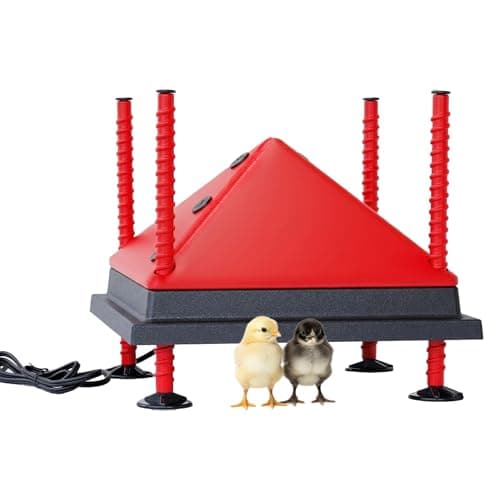
Every radiant panel worth considering, from a 50 W brooder panel to a 200 W coop panel, with certification noted.
Winter Heat
Heat lamps for chickens, and the safer alternatives
Heat-lamp alternatives ranked by how little can go wrong, plus an honest look at when a bulb lamp is still the answer.
Winter Heat
Coop heater fire safety
The checklist for running any mains appliance in a coop safely — and why extension guidance leans against heaters at all.
Hatching & Brooding
Heat plate vs heat lamp for chicks
The brooder heat decision, with the narrow cases where a lamp is still the right tool.

Winter Heat
Do chickens need heat in winter?
The short answer is no, for healthy adult hens — and the reasons are about fire risk and moisture, not toughness.