Predator Protection
The best electric fence chargers for chickens
Poultry netting leaks current to every blade of grass it touches. The charger is what decides whether the fence still bites in August.
Chickens & Coops earns a commission when you buy through our links, at no extra cost to you — from Amazon Associates and from brand partner programs. Prices come from the retailer and change; the date beside every price is when we last verified it. Full disclosure.
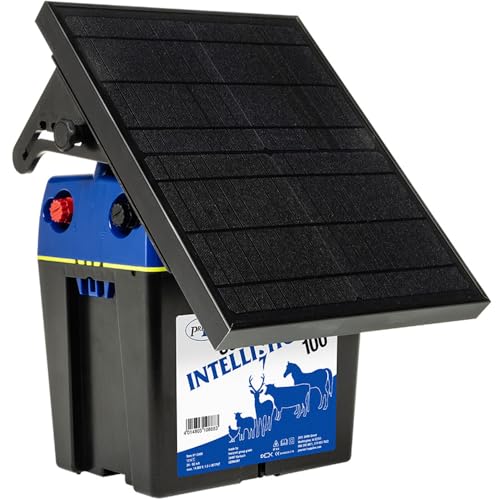
Best Fence Charger
Premier 1 Solar IntelliShock 100 Fence Energizer, 1.0J
A 1.0 joule energizer with a 15W solar panel and load sensing, from the company that makes the poultry netting it is most often paired with.
#ad How we are funded · Price as of November 18, 2026
Quick picks
| # | Product | Output | Score | Price |
|---|---|---|---|---|
| Rank 1 | Premier 1 Solar IntelliShock 100 Fence Energizer, 1.0J The energizer matched to the netting most backyard flocks buy | 1.0 J | 9.5 | $397.00Premier 1, 1.0J |
| Rank 2 | 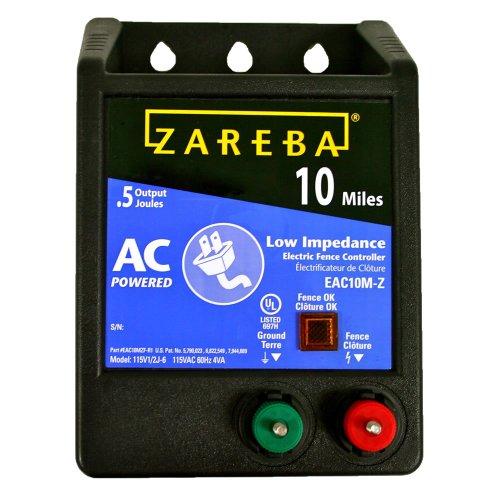 Zareba 10 Mile AC Low Impedance Fence Charger, 0.5J A permanent run with an outlet within reach | 0.5 J | 9.5 | $99.98Zareba 10 Mile, 0.5J |
| Rank 3 | 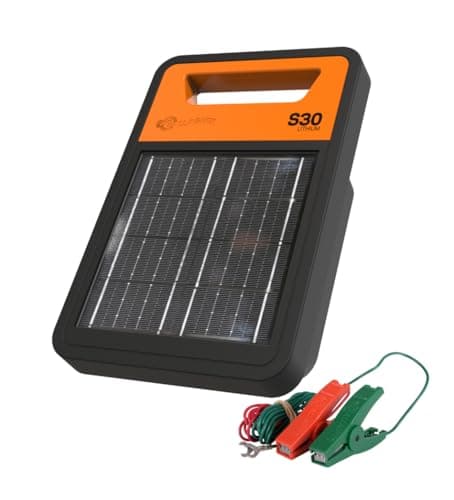 Gallagher S30 Solar Electric Fence Charger, 0.3J Energizing poultry netting with no mains supply | 0.3 J | 9.3 | $339.99Gallagher S30, 0.3J |
| Rank 4 | 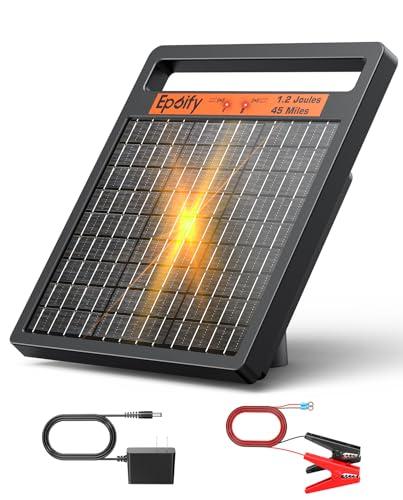 Epoify Solar Electric Fence Charger, 1.2J Solar joules per dollar, with a mains fallback | 1.2 J | 9.3 | $110.99Epoify Solar, 1.2J |
| Rank 5 | 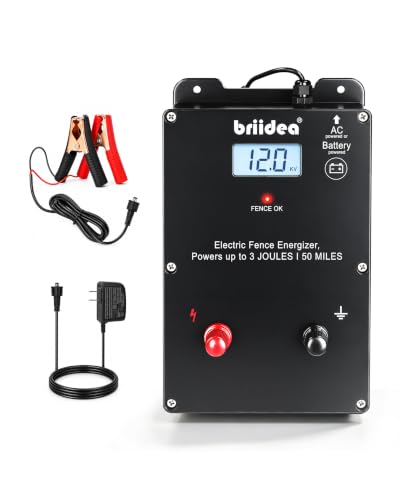 Briidea Electric Fence Energizer, 3J, Battery or AC The cheapest way to put real joules on a fence | 3 J | 9.2 | $69.99Briidea Electric |
#ad Prices come from Amazon and change. How this site is funded. Scores are our own published rubric, not a lab test — see how we pick.
An electric fence charger is the half of the system people under-buy. The netting is the visible purchase and the energizer is the one that decides whether it works — and poultry netting is the hardest load in the category, because every strand that touches wet grass bleeds current away. A charger sized for plain wire will read fine in May and be a decorative fence by August.
The short answer: for a backyard run of poultry netting, buy on joules, ignore the mile rating, and pick the power source that matches whether the fence moves. Everything below works through what that means.
Joules, not miles
Every charger is sold on two numbers and only one of them is useful.
- Joules are the energy per pulse. This is the specification. More joules means the fence keeps shocking through vegetation, wet weather and a long run of mesh.
- Miles are a marketing figure derived from a clean, taut, single strand of wire with nothing touching it. No backyard fence is that, and poultry netting is the furthest thing from it. A "45 mile" charger on 164 feet of netting is not 45 miles of headroom.
The practical reading: for one standard run of poultry netting, somewhere around 0.25 to 0.5 joules is a sensible floor, and more is genuinely useful if the fence sits in grass that grows. Premier 1, who make the netting, size energizers well above what the equivalent length of plain wire would need for exactly this reason.
How we ranked these
Output in joules first, read against what poultry netting actually draws. Power source second — solar, mains or battery, matched to whether the fence stays put. Durability third, because an energizer lives outside and the failure is usually water. Reliability fourth, meaning whether the thing keeps delivering the rated pulse rather than its first-week pulse. Then value.
Every figure in the spec tables below is the one the manufacturer publishes. Where a listing does not state a figure — a weatherproof rating, a fence length for mesh rather than wire — our tables say so rather than estimating it.
The picks
Five energizers from 0.3 to 3 joules, across solar, mains and battery, ordered by how well each one suits a backyard run of poultry netting.
#1 · The energizer matched to the netting most backyard flocks buy
#ad How we are funded · Price as of November 18, 2026
Premier 1 Solar IntelliShock 100 Fence Energizer, 1.0J
Premier 1 SuppliesA 1.0 joule energizer with a 15W solar panel and load sensing, from the company that makes the poultry netting it is most often paired with. Joules are the whole specification here, and 1.0 is enough to keep a long run of mesh hot through the summer growth that drags every other charger down.
| Output | 1.0 J |
|---|---|
| Solar panel | 15 W |
| Power | Solar or 110V (AC adapter included) |
| Load sensing | Yes — reduces battery drain at high voltage |
| Rated for | Sheep, goats, poultry and cattle |
| Fence length rating | Not published by manufacturer |
Specifications per Premier 1 Supplies published specifications, as published at the date above.
Why we picked it
- 1.0 J is real headroom for poultry netting, which leaks far more current to vegetation than plain wire does
- Load sensing cuts battery drain when the fence is clear, which is what gets a solar unit through a cloudy week
- Runs on solar or mains from the same box, so a net that moves to a shaded paddock is still powered
- Made by the company that makes the netting, so the pairing is not guesswork
Good to know — The most expensive energizer here by a wide margin, and a short backyard net does not need 1.0 J
Our rubric
- Predator resistance
- 10.0
- Install effort
- 9.3
- Durability
- 9.8
- Reliability
- 10.0
- Value
- 7.9
#2 · A permanent run with an outlet within reach
$149.99 33% off
#ad How we are funded · Price as of November 18, 2026
Zareba 10 Mile AC Low Impedance Fence Charger, 0.5J
ZarebaHalf a joule of low-impedance output on mains power, from a brand that has been making fence chargers for decades. If the netting lives in one place and there is an outdoor outlet nearby, this is the cheapest way to a shock that does not fade on a cloudy week.
| Output | 0.5 J |
|---|---|
| Power | 110V AC, plug-in |
| Type | Low impedance |
| Rated range | 10 miles of wire |
| Model | EAC10M-Z |
| Weatherproof rating | Not published by manufacturer |
Specifications per Manufacturer figures as published on the Amazon product listing, as published at the date above.
Why we picked it
- Mains power removes the whole battery-and-sunlight problem that defeats most solar units in winter
- 0.5 J is ample for a backyard run of poultry netting
- Low impedance is the design that keeps shocking through wet vegetation rather than shorting out on it
- A fraction of the price of the solar units, because you are not paying for a panel and a battery
Good to know — Needs an outdoor outlet within reach of the fence, which rules it out for a net you move around a paddock
Our rubric
- Predator resistance
- 9.3
- Install effort
- 9.3
- Durability
- 9.3
- Reliability
- 9.8
- Value
- 9.8
#3 · Energizing poultry netting with no mains supply
#ad How we are funded · Price as of November 18, 2026
Gallagher S30 Solar Electric Fence Charger, 0.3J
GallagherA 0.3 joule solar energizer from a serious fencing brand. Joules is the only specification that matters on an energizer, and 0.3 J is right for a backyard run of poultry netting.
| Output | 0.3 J |
|---|---|
| Power | Solar |
| Stated range | 20 miles of fence |
| Type | Electric fence energizer |
Specifications per Manufacturer figures as published on the Amazon product listing, as published at the date above.
Why we picked it
- Output published in joules, which is the figure that actually predicts performance
- 0.3 J comfortably drives a few rolls of poultry netting
- Solar, so no mains run to the fence line
- Gallagher is a genuine livestock fencing manufacturer with a support path
Good to know — Expensive — often more than the netting it powers
Our rubric
- Predator resistance
- 9.8
- Install effort
- 9.3
- Durability
- 9.8
- Reliability
- 9.8
- Value
- 7.9
#4 · Solar joules per dollar, with a mains fallback
$169.99 35% off
#ad How we are funded · Price as of November 18, 2026
Epoify Solar Electric Fence Charger, 1.2J
Epoify1.2 joules from an 8W panel with a 10000 mAh battery and an AC backup input, at roughly a third of what the specialist brands charge for comparable output. The short-circuit alarm is the useful extra: a netting fence that has shorted on wet grass is a fence that is not working, and you otherwise find out when something gets in.
| Output | 1.2 J |
|---|---|
| Solar panel | 8 W |
| Battery | 10000 mAh |
| Power | Solar with AC backup |
| Rated range | 45 miles of wire |
| Alarm | Short-circuit alarm |
Specifications per Manufacturer figures as published on the Amazon product listing, as published at the date above.
Why we picked it
- 1.2 J is more output than the specialist 0.3 J units at a third of the price
- Short-circuit alarm tells you the fence has gone down, which is the failure nobody notices in time
- Solar with an AC backup input covers both the movable net and the winter week with no sun
- Sealed magnetic switch rather than a rubber-booted toggle, which is the part that usually lets water in
Good to know — No brand support history behind it the way Premier 1 and Gallagher have
Our rubric
- Predator resistance
- 9.8
- Install effort
- 9.3
- Durability
- 8.9
- Reliability
- 9.3
- Value
- 9.3
#5 · The cheapest way to put real joules on a fence
#ad How we are funded · Price as of November 18, 2026
Briidea Electric Fence Energizer, 3J, Battery or AC
Briidea3 joules and a 12 kV rating with an LCD display, running from a battery or mains, at the lowest price here. On paper it out-specifies units costing five times as much, which is the thing to be clear-eyed about: the output is real, the build and the support behind it are not in the same class.
| Output | 3 J |
|---|---|
| Voltage | 12 kV |
| Power | Battery or AC |
| Display | LCD |
| Rated range | 50 miles of wire |
| Solar panel | Not included |
Specifications per Manufacturer figures as published on the Amazon product listing, as published at the date above.
Why we picked it
- 3 J at this price is unmatched anywhere else on this page
- An LCD readout of the actual output is genuinely useful for finding a short
- Battery or AC covers both a fixed run and a net away from the house
- Cheap enough to keep a spare, which is a real argument with electric fencing
Good to know — No solar panel in the box — you supply the battery and a way to charge it
Our rubric
- Predator resistance
- 9.8
- Install effort
- 9.3
- Durability
- 8.4
- Reliability
- 8.9
- Value
- 9.8
Solar, mains or battery
| Power source | Best when | The catch |
|---|---|---|
| Solar | The netting moves around a paddock, or there is no outlet near the fence | A dull week drains the battery; panel needs siting clear of shade and keeping clean |
| Mains (AC) | The fence is permanent and an outdoor outlet is within reach | Useless for a net you move; the unit itself wants to live under cover |
| Battery | Short seasonal runs, or as a backup | You are managing charge yourself, which is the job solar exists to remove |
| Solar with AC backup | Most backyard flocks — a fence that mostly stays put | Costs more than either alone, and you still site a panel |
The budget pick, and the honest caveat
The cheapest real output here is the Briidea 3J energizer, which on paper out-specifies units costing five times as much. The output rating is real. What you are not getting is a solar panel, a weatherproof housing of the same class, or a brand with a parts history — so house it under cover, supply your own battery, and treat it as the charger you can afford to replace rather than the one you buy once.
At the other end, the Premier 1 Solar IntelliShock 100 is expensive and is the one to buy if the fence is the only thing between your flock and a known predator. One joule with load sensing on a 15-watt panel is headroom you will not run out of, from the company that makes the netting it is most often paired with.
Grounding is where most weak fences actually fail
An electric fence is a circuit, and the ground rod is half of it. The pulse leaves the charger, travels the fence, passes through the animal into the soil, and has to find its way back to the charger through the ground system. A charger with an inadequate ground delivers a fraction of its rated shock no matter what the box says.
- Use a proper galvanized ground rod driven to full depth, not a tent peg and not a length of rebar in dry topsoil.
- Dry soil is the enemy. Sandy or drought-hardened ground conducts poorly, which is why a fence that worked in April feels weak in August. Siting the rod somewhere that stays damp — a shaded spot, near a downpipe — is a free improvement.
- More rods beat a bigger charger. If the fence tests weak and the vegetation is clear, adding a second ground rod several feet from the first fixes it more often than upgrading the energizer does.
- Keep the ground system away from building grounds and from any buried utility, which is both a safety matter and a source of stray-voltage complaints.
Testing it, and what the readings mean
A fence tester is the cheapest tool in this category and the only way to know whether the system works. Without one you are relying on the absence of a dead bird as your feedback loop, which is a slow and expensive way to learn.
- Test at the charger first. This tells you the energizer is delivering. If it is low here, the problem is the unit, the battery or the ground.
- Test at the far end of the netting. A big drop between the two readings is current leaking along the fence — vegetation, a fallen strand touching soil, or a damaged net.
- Walk the line when the readings disagree. The short is almost always visible: grass grown into the mesh, a post leaning into a shrub, a net sagging onto wet ground.
- Re-test after cutting back. It confirms you found the fault rather than one of several.
Safety, and the rules that apply
Livestock fence energizers sold in the US are built to deliver a short, high-voltage, very low-current pulse rather than a continuous current, which is what makes them safe around animals and people. Two practical points follow from that:
- Buy a purpose-built fence energizer, never an improvised mains device. The pulse timing is the safety feature.
- Mark the fence where children or visitors might reach it. Warning signs come with most netting kits and cost almost nothing separately.
Local rules on electric fencing vary by municipality, and the ordinance that covers it is usually the same one that covers how many chickens you can keep. Worth a read before the posts go in rather than after.
What the charger does not do
Electric netting is a deterrent that works on an animal that touches it and decides not to again. It is not a barrier, and the distinction matters:
- It does not stop a hawk. Nothing on this page addresses aerial predators — protecting chickens from hawks is netting of a completely different kind.
- It does not replace the coop's own hardening. The fence protects the run; a raccoon that gets past it still meets the coop door. Hardware cloth and a real latch are what matter there.
- It does not work unenergized. A net with a flat charger is a tripping hazard that teaches predators the fence is safe, which is worse than no fence.
- It needs a ground rod. Nearly every weak-fence complaint traces to grounding rather than to the charger, and a dry summer makes it worse.
Electric fencing for chickens covers the netting itself, and the top chicken predators covers which animal you are actually dealing with — the answer changes what you buy.
Three checks before you buy
- Count the netting, not the acreage. One standard 164-foot net is the unit to size against; two nets is roughly double the load, not the same load spread wider.
- Decide whether the fence moves. That single answer rules out mains or rules out nothing, and it matters more than any spec on the box.
- Budget a ground rod and a fence tester. Neither is expensive and between them they account for most of the fences that "stopped working".
Frequently asked questions
What size electric fence charger do I need for chickens?
Why does poultry netting need a bigger charger than wire?
Is a solar fence charger good enough for chickens?
What do joules mean on an electric fence charger?
Will an electric fence stop a raccoon or a fox?
Why is my electric fence not shocking?
Our recommendation
If you buy one thing from this page, buy the first one. The second is here because it is the alternative worth weighing against it, not because a list needs two entries.
Best Fence Charger
Premier 1 Solar IntelliShock 100 Fence Energizer, 1.0J
The energizer matched to the netting most backyard flocks buy
#ad How we are funded · Price as of November 18, 2026
Runner-up
Zareba 10 Mile AC Low Impedance Fence Charger, 0.5J
A permanent run with an outlet within reach
#ad How we are funded · Price as of November 18, 2026
Brands: want your product tested? For Brands.
Sources
Read next
Predator Protection
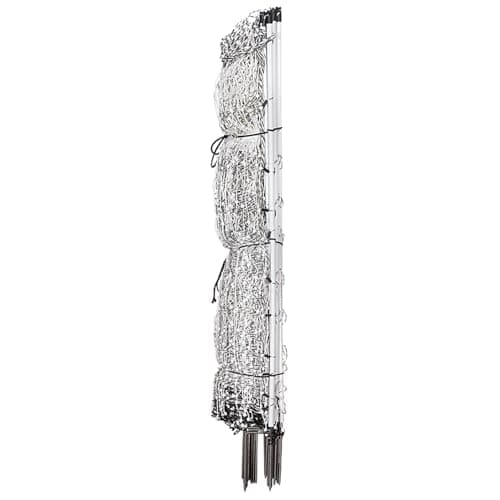
The best electric fencing for chickens
Electric poultry netting and the energizers that drive it, with the joule figure that actually predicts performance.
Predator Protection
The main chicken predators, and what stops each one
An identification guide: what each predator does, how to tell which one visited, and the one measure that stops it.
Predator Protection
The best chicken predator deterrents
Deterrents and small hardware ranked with an honest line between what deters and what physically stops an animal.
Predator Protection
How to keep raccoons out of a chicken coop
Five changes that stop raccoons, in order of effect, plus why the feed store is part of the problem.

Chicken Coops
The best chicken coops under $300
What $300 actually buys in a chicken coop, the capacity arithmetic that decides whether any of it is good value, and six picks with a live price on each.